Below is an annotated list of children's literature for the elementary classroom. The books are organized by the Six Elements of Social Justice Curriculum Design (Picower, 2007). It is based on work by pre-service teachers at Montclair State University. They have read and reviewed these books and provided insights into how they can be used in K-5 settings.

Thursday, September 28, 2023

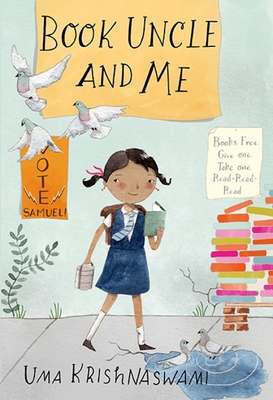
Book Uncle and Me


Book Uncle and Me

Written by Uma Krishnaswami

Illustrated by Julliana Sweeney
Book Uncle and Me

Purchase Link


Yasmin-ma, a curious, determined and courageous nine year old girl is on a mission to bring back Book Uncle, a kind

retired teacher, and his free lending library! Throughout the book, you can clearly see that she is a true leader as she

politically organizes and realizes her own agency and the power of grassroots activism. As I reflect and continue to

find meaning in this book, I appreciate how this book recognizes and gives power to youth in which they rightfully

deserve. This book digs into the reality of the main characters' community. At the end of the book, she helps enact

political change by bringing back Book Uncle. This book would be a perfect read for fourth graders because they can

recognize different issues within their community and plan for action.


This book portrays Element 4: Social Movements and Social Change. Book Uncle and Me aligns with Element 4

because the author tells our students about ways that ordinary people can and will enact change in their communities.

Even young people can get involved in democracy. Additionally, Yasmin-ma exemplifies a leader in which she was

able to even change the outcome of the election at 9 years old. Being a part of the Global majority, she was able to

overcome obstacles that the candidates running had in place. Books can change your life, and this book is a must

read !!


Book Uncle and Me Classroom Activity:


There are a variety of discussion questions and classroom activities that are provided at the end of Book Uncle and Me.

These are activities that I liked from the book being that they address the community movement that was created by

Yasmin-ma as well as taking a look at the similarities and differences of the student’s lives and the life of Yasmin-ma. 


1. The teacher can prepare a Venn Diagram on post-it paper. The teacher can make a note of ten things that are most

important between the student's life and Yasmin-ma's, and ten things that are the same. We can ask students to look

at the first list. First, we can ask "Why do you think these things are so different from your life?" Then, we look at

the second list and ask "Why do you think these things are so similar?"


2. The main characters in the book try to affect change by communicating with the city's mayor.This is a good example

of community movement, and is a way to make sure your voice is heard by the people in power. As a class, discuss

any issues that you feel needs to be addressed. Some suggestions are creating a community garden, local park or

waterway that needs to be cleaned up, or creating a local park. Write to your local government about this, representing

your community's views.

Buried Sunlight: How Fossil Fuels Have Changed The Earth

Buried Sunlight: How Fossil Fuels Have Changed The Earth
Written by Molly Bang & Penny Chisholm
Illustrated by Molly Bang
Grade Level: 2-5
Purchase Here

    When I was looking through my school’s science textbook I was shocked by its omission of any discussion about climate change. There’s a lesson about how humans can change the environment, a lesson about how energy conservation can help the environment, but no lesson linking the two. Omitting a discussion about global warming makes both lessons far less effective. It refuses necessary connections that our students need to make as citizens of an increasingly warming planet. It's also an act of extreme cowardice, cowing to the worst voices in politics, hungry to make a culture war out of even a children's science textbook. Thankfully, Ms. Moreira, who will be my mentor teacher next semester, had a book well suited for 3rd graders in her classroom that addresses the mechanisms of climate change directly.

    Cowritten by MIT ecology professor and National Science Medal winner Dr. Chisolm and children book author Molly Bang, Buried Sunlight forms a part of Bang's Sunlight Series. Bang illustrates Buried Sunlight in luminous watercolors, giving even complicated science diagrams a childlike sense of wonder. I especially love how carbon dioxide is rendered like a twinkling firefly. Told from the perspective of our sun, Buried Sunlight gives a detailed, nearly comprehensive look at climate change. It explains how coal and oil are "buried sunlight." Burning those resources releases carbon dioxide into the air, which forms greenhouse gasses that will heat our planet and scar the environment. The end of the book is filled with you statements, to accentuate that even young children can reduce their carbon footprint. "Will you use my ancient sunlight more slowly, find other sources of energy, and invent ways to thin the blanket of CO2 ? The choice is yours." This book would be a perfect book to read to 3rd graders to introduce climate change to them.


   Buried Sunlight fits the Awareness Raising element of Social Justice Teaching well. Awareness Raising seeks to make our students aware of social justice issues that they face that they might not even know about. This book works to explain an extremely complicated, yet important social justice issue with clarity. In this country, we easily shunt aside "Inconvenient Truths" about how we live, even out of our science textbooks. Climate change is also an environmental and racial justice issue. As I saw in an environmental justice tour of Newark's Ironbound District, our environments are not race blind. Climate change is affecting and will continue to affect POC communities at much greater rates than white communities. Much of Newark is built on former wetlands and riverbanks. These areas are prone to flooding, especially as climate change accelerates. Climate change is intrinsically linked to social and racial justice. Although Buried Sunlight is comprehensive, one weakness is that it does not talk about these environmental justice issues. However, I think Buried Sunlight is still a great tool for Awareness Raising about the mechanisms of climate change. After being read this book, I think students will have a much greater awareness of how climate change works, and the actions in their own lives that contribute to global warming.
    I would use this book in my 3rd grader's science class, in between our textbook's lessons about environmental change and energy conservation. I would create an activity where I read them this book, and then have them write answers to some of the discussion questions written by the publisher. In future lessons, I would try to incorporate an environmental justice lens to climate change; that rich communities are the leading contributors too climate change and poor communities will be harmed the most it. I would also make sure future lessons touch on advances in green energy technology and legislation. It's one thing to raise awareness about climate change, but I think even many adults aren't aware of ways that they can take action against such a massive problem. Buried Sunlight is a great tool to raise awareness of one of the key problems of the 21st century, one America is only just now beginning to meaningfully address. 

Wednesday, September 27, 2023

Harlem Grown


Harlem Grown: How One Big Idea Transformed a Neighborhood

Written By Tony Hillary

Illustrated by Jessie Hartland 

Grades K-3

Summary

Harlem Grown is a beautifully illustrated children's book based on a true story that focuses on the historically and culturally notable Harlem in New York City. A bustling and lively urban community with a desolate lot piled with trash is cleaned up by Neveah, a student of PS. 175 school, other students, and the people of the neighborhood. They united and transformed this "haunted" lot into a community garden that engages children, families and people of the community. The garden provides fresh and local produce for the members of the community, grown by those same people. 

I chose this book because it is a real life example of Element 6 of SJE. It depicts a community coming together on one accord because of one man's idea to transform an empty lot into something useful for the community which allows for access to fresh produce, education on urban agriculture. This book can encourage young students to collectively be the voices of change within heir own communities. Students may feel as though they have no real ability to cause social change, but encouraging folx to come together within your community and doing something about an issue you feel passionate about is more than possible! This also gets students especially in urban communities thinking about locally grown and harvested foods and start a conversation on how they could implement agriculture in their own communities.

Classroom Activity

I would use this book in a lesson and prompt students to think about areas of their community where they would be able to create a community garden similar to the one shown in Harlem Grown. Empty lots with fertile soil are crowded with trash and are typically owned by the city. Clearing that space and utilizing it as a green space would be beneficial to the community. Students would draw what types of foods they would want to grow in a garden and accompany their drawings with a writing piece that urges their city officials to allow a space for them and other students to grow local produce and allow everyone in their community the opportunity to benefit from the garden. We can talk about the benefits of eating locally grown produce, learn about advocating for a cause of passion.  Students will also have the opportunity to plant seeds of their own, interact with their community, learn about urban agriculture, and incorporate different content areas like science and math.

Classroom Resources

Buy Harlem Grown Here

El Coqui In the City


Coqui in the City 

Written and Illustrated by Nomar Perez

Written for grades Prek-2

Where to find the book 


Short Summary: 

            This story is a powerful book that can be relatable to many students of                                                                         different ethnicities. It is a book that shows the experience of a child named Miguel who moves from their home in Puerto Rico, the place that is all they know, to move to New York. During this move the child is sad about leaving his beloved abuelos, his pet frog coqui who he did everything with, not being able to get quesitos. 

            Upon moving to this new city, Miguel was overwhelmed by the new atmosphere, the sounds, the people, all the what ifs about being a new person in a new place until his mama and him go exploring. While exploring they find things that seem familiar to him that remind him of home, Spanish words, music, the sound of a frog that reminded him of coqui, a baseball field that reminded him of the signed baseball by Roberto Clemente that his abuelo gave him, and his dad found a place that sold quesitos and surprised him after work. 

                What had seemed so unfamiliar started turning into things that were familiar to him that made him feel like he belonged, in an atmosphere that was similar to him. The story ends with Miguel feeling at peace with the sounds of the Spanish music that reminded him of home, and helped him drift into sleep as like the sound of his coquis helped him sleep back home. He discovered then that being somewhere new wasn’t so bad after all. 

Element 2: Respect for Others

Like many children who migrate to a new place at such a young age with their families to have a better future, Miguel came from Puerto Rico to New York, left behind all that he knew, to start fresh and new in  place unknown to him. This book falls under Element 2: Respect for Others because he endured similar things that many other children in the United States endured before moving to somewhere unknown, starting somewhere new where you sometimes feel like you don’t belong. The respect aspect of this Element is giving the ability to allow students to share their cultural background like Miguel did with his pet coqui, the baseball his Abuelo gave him that was signed by a Puerto Rican baseball player, his favorite snacks, the things that make him feel at home while respecting the diversity of where he is from, and teaching other that he is like them in many ways, and each persons culture is just as beautiful.

Classroom Activities:

                   Show a read aloud video if you don’t have access to the book. Here is a link to it.

                   Create a T Chart on intimidating things when moving to a new place and things to make the move smoother. 

                    Create a T chart on how you felt, or your peer thinks you felt or would feel if and when you first made the move, versus how you felt once you got to know the community. Did anything make you feel at home, or remind you of home, do you wish you could go back home, or stay at your new home and why? 

                    Draw and color a picture that shows a time Miguel started warming up to his new home.

                    Other lessons available in this link 

Resources

                    Resources with more information on the book, the author, lessons, book readings, etc


Sunday, September 24, 2023

Ruby Bridges Goes to School


Author: Ruby Bridges

Illustrator: Ruby Bridges 

Genre: Biography and Autobiography

Grade level: K-2nd


Summary: 

Ruby Bridges is the first African American student to attend William Frantz Elementary School, located in Louisiana back in 1961. This was a whites-only school. The government gave Ruby permission to attend this school because it was much closer to her home and offered a better education. During this time there was segregation in the United States, white and black people were not allowed to be together in schools, restaurants, bathrooms, movie theaters, and so on. When Ruby attended William Frantz Elementary School white families were very upset about it. This resulted in them removing their children from the school because they did not want a black child at their white child's school. Everyday people would stand outside the school as Ruby arrived, threatening her, saying racist slurs, and saying they want segregation back. Ruby was the only student in this school building for months, and people would threaten her everyday. Ruby had a teacher named Mrs. Henry. Mrs. Henry is a white woman, this teacher stood by her side and taught her in the empty classroom for the majority of the school year. One day students finally began to slowly come back to the school. Many famous people began writing Ruby letters admiring how brave she is for fighting a change in equality, to end segregation in schools. People like the First Lady Eleanor Roosevelt and artist Norman Rockwell reached out to Ruby with their letters. Ruby at a very young age faced many battles and mistreatment from racist people. Ruby was fighting for justice, and was representing her black community during these hard times. She is still alive today and very well known for her story. Ruby goes around to different schools telling her story, to teach about kindness and social justice.

Element 4: Social movements and social change

Ruby Bridges at the age of 7 fought for social equality in schools and today she is still a civil rights activist. Element 4 is about social movements and social change and that is what Ruby did when she began attending an all white school. By Ruby attending this school she was fighting against what was normal at the time, segregation. Although so many white people were very angry at this 7 year old black girl for attending "their" school, she never once backed down, attended school, and got her education whether people liked it or not. "Some people did not want a black child like me to go to the white school. They stood near the school. They yelled at me to go away", states Ruby in her book. Thanks to Ruby's bravery she was able to begin a movement for social change in the United States. Ruby is one of the many well-known social activists that we know, who were brave enough to fight for where we are today.

Classroom Activity:

After reading the story I would like to go over some vocabulary that may have stood out to the students and talk about what they mean. I would then like the students to create a timeline of the story placing all of the events in sequence using pictures, years and descriptions from beginning, middle, and end.

Other classroom activities: 

Ruby Bridges Flipbook

Timeline activity link

Sources:

Youtube read aloud

Book purchase

Book purchase

A Day with No Words


Author: Tiffany Hammond
Illustrator: Kate Cosgrove
Genre: Fiction
Grade level: K-4
Reading age: 4-8 yrs old


Summary:
The story follows a mother and her son, Adian, as they go through their day. They use an assistive device, a tablet, to communicate with one another and others as they head to a park and restaurant. It shares the perspective of a Black neurodivergent non-verbal mother and son using colorful illustrations and detailed language. This book speaks to the ableism and discrimination occurring in the neurodivergent, non-verbal, and communities in between. Mama endures much discrimination for her son's “odd” behaviors but she stands up for her son with every ounce of love and support. 

Element 2: Respect for others:
The book shows respect for others particularly when Mama and Aidan are at the park and hear families making comments. When the Mama hears this she informs them that Aidan may not speak but he can still hear. She speaks to the stereotypes and judgments that people were making. Mama then proceeds by getting Aidan ready to play too (barefoot in the wet grass). The cashier is a prime example as the illustrator shows facial expressions of patience and acceptance to Mama and Aidan as they place their order.  The story embraces differences and addresses respecting others for those differences as they aren’t much different from your own.

What Would I do:
After reading this book, I would want students to look through the book and notice the picture particularly paying attention to the part where the illustrator paints the different sounds Adian hears. I want the students to paint a picture of their favorite sound to hear. I want to see the sound they choose and how it makes them feel. I would potentially ask for a sound that they enjoy hearing and a sound that they don't like. 

Other ideas for the classroom: 


Saturday, September 23, 2023

Dolores Huerta: A Hero to Migrant Workers


Author: Sarah Warren
Illustrator: Robert Casilla
Genre: non-fiction
Grade level: 1-4
Reading age: 6-9 yrs old


Summary: 
Dolores Huerta is a woman, who advocates for the rights of underpaid farm workers. In this book, we learn about Dolores Huerta's fight for safe working environments and fair wages. We venture through a timeline of her life noting the illustrations as she goes from career to career on her journey as a social justice warrior. It begins when she is a teacher and she begins to question why her students are struggling in class. Detective Dolores Huerta finds out that the parents were getting underpaid and working conditions were harsh. Organizer Dolores Huerta was not going to stand for this injustice, so she gathered the families and many others to raise their voices. This is a story about justice, activism, immigration equality, womanhood, workers' rights and so much more. 

Element 4: Social Movements and Social Change:
Dolores Huerta is a warrior of change. Her story is to be shared as a still current labor leader and civil rights activist. In her earlier days, she organized farmer workers in order to advocate for safer working conditions and better pay. In the story, she leads a strike, boycotting grapes, which ends up allowing farmers to receive better wages and conditions. A peaceful movement that included people of all ages and genders. She is an agent of change and the story captivates her life through many journeys, but also the people who contributed to the movement's success. 
"While some workers argue with the bosses, others watch the children dance and keep them safe"
Mother, Father, sisters, or brothers all contributed to the movement and she is someone who can share the story. 

What Would I do:
After reading I would like to discuss and reflect as a class. The idea would be to talk more about how this appears in our day-to-day and what can be done. When reading you can hear the struggle, but I would want the students to act it out in small groups. I would make groups of 2 and would ask them to act out occurrences on a day working on the farm. 
(The script is from here page 107)
I would follow by asking the discussion questions about what issues were discussed in the script, what would they do, what could they do, and who could help them. 

Other ideas for the classroom:


Freewater - Amina Luqman Dawson


Freewater - Amina Luqman-Dawson

Purchase Here! https://bookshop.org/p/books/freewater-amina-luqman-dawson/19395696?ean=9780316056618

Element 3: Issues of Social Injustice

Grade Level: Middle Grade (6-8) 

Summary: In striking detail and accessible prose, Amina Luqman-Dawson's Freewater tells the story of Homer and Ada as they escape life as enslaved children on a plantation in search of freedom in the north. In their journey, they come upon Freewater, a settlement founded and populated by formerly enslaved people. Here they learn how this community of color resists the oppressive forces of slavery to imagine and create their own futures. A book equally fraught with the horrors of American slavery, and the histories of possibility and resistance, Freewater tells the story of American slavery and resistance through the eyes of young people as it's never been told before. 


Element 3: Much of Freewater deals with the losses and struggles suffered by Homer and Ada both on the planation as enslaved people, and after their escape. The book illustrates the horrors of chattel slavery and the enormous sacrifices and risks undertaken by those who escapeed. Ada and Homer are forced to leave their mother behind and enter a frontier completely alien to them where their very existence is plagued by the fear of capture and re-enslavement and the traumas of family separation. The book directly addresses the historical roots of oppression while examining how different identities--men, women, old and young--experienced this oppression differently. The book also serves as a transitional text between Elements 3 and 4 for its exploration of early resistance efforts which might allow readers to link subsequent Black liberation movements with their historical origins. 


How I Would Use The Book: What I love about this book is the way it allows us to reimagine the history of racism in America. Telling the horrific story of slavery is incredibly important: it is one of two foundational genocides at the heart of American history whose legacy and impact cannot be overstated. But Freewater allows us to view this time period not just as a time of oppression but also as the beginning of social and political resistance efforts, community organizing, and Black meaning-making. In this way I would like to use the text to ask students how we might be critical about the popular narratives surrounding racial justice and injustice in America. We are often told in school that several important social movements have all but eliminated racism--the emancipation proclamation, Reconstruction, Civil Rights movement, and the election of Barack Obama. Freewater is a text which offers a way of understanding racism as a historical continuum which has always existed, but has always existed alongside Black social and political resistance. Activities might include critically responding to, discussing, and reflecting on how their experience of reading the book allows for a better understanding of oppression and slavery. They may also reflect on how the book sheds light on aspects of historical injustice that are represented more graphically/honestly in Freewater than in other historical or fictional texts. 


Other Notes: I think reading contemporary black authors who write about the legacy of slavery is extraordinarily important for young people. When a text has been written recently it inherently communicates a sense of importance for students. It also allows for a richer understanding of how the past and present are linked and inextricably connected to one another. It's a text that speaks to events hundreds of years ago but it has import on the world around them. It also supports authors of color who are doing the incredible work of shedding light on emancipatory histories and ideas as well as historic injustices. 


Separate Is Never Equal: Sylvia Mendez and Her Family’s Fight for Desegregation


Author: Duncan Tonatiuh 

Illustrator: Duncan Tonatiuh 

Genre: Narrative Nonfiction 

Grade Level: 1- 4th 


Summary: 

Separate Is Never Equal: Sylvia Mendez and her family have recently moved to Westminster, California where they are so excited to be enrolled at a school near their home. Those happy smiles they had disappeared in a matter of seconds when the school secretary told them they could not be accepted. The secretary told them they had to go to the " Mexican School" without giving them a clear explanation and only said that those were the rules that had to be followed. Sylvia spoke perfect English and was an American citizen. She questioned why her brother and she weren't allowed to enroll in the school while their cousins were the ONLY ones that could enroll. She started to wonder if the color of their skin had something to do with the decisions that were made. As the book continues, Sylvia's father decides to take action by forming a group called the Parents Association of Mexican-American Children where he started collecting signatures for a petition that allowed children from all different backgrounds and skin colors to be able to go to any school they want and have the same opportunities as others to become doctors, teachers, nurses, and other carriers. The Mendez family never gave up fighting for justice and equality which led them to victory! 

Element 6: Social Action: 

This book is a great demonstration of what it looks like to have social action in a community setting. In the book, it demonstrated if they wanted to fight for a cause they would need to have a majority of people on their side to fight with them.  Being a one-person team there wasn't much that could be done or even have their voices heard. Once Sylvia's father heard what had happened he took action real quick. He got signatures for a petition, then went to court to fight for this injustice, and after the case; the news started to go all around the world and families started to get a lot of support from different organizations. Mr. Mendez wanted his children to have an equal opportunity in education just as other kids have. If we work together as a village we will get things taken care of. Mendez's family fought with actions and evidence instead of threatening to do something about it. La justica estaba a lado de ellos which means justice was on their side to win! This book shows students that if they see a problem occurring in their neighborhood, they can express their thoughts and feelings about the situation. They can take action and do something about it. They can stand up for what is right and fight back to have their voices heard. 

Classroom Activity:

This book has many topics I could integrate into my classroom that can be used in different grade levels. For example: 

  1. What does it mean by nonfiction? Fiction? 
  2. Creating a story map of important events, characters, setting, and more 
  3. Educating them about what being "EQUAL" means and being fair. (Asking students where they have seen equality and fairness and if they have experienced it) 
  4. What is racism? What social action can we take to help others?
  5. What does it mean to fight for justice and equality? 
  6. What is segregation? Why did it happen? How did it end? 
  7. What does it mean for us to go around collecting signatures? (Petitions)

Activity Sources for class instruction:

1)  Teacher Guide

2) Literature Guide 

You can find the book on the website below:

SEPARTE IS NEVER EQUAL 


Thursday, September 29, 2022

LUNA:

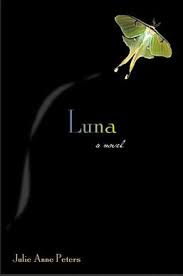
Luna 

    by Julie Anne Peters


Summary: 

A coming of age story of two sisters becoming themselves and stumbling along the way. Told through the perspective of their sister Regan, we watch as Liam, longing to spread their wings and escape the entrapment of their basement, begins to live as their true self as Luna.

What does it mean to be true to yourself?

What are you willing to risk to be free?

Regan barely knows who she is when her "perfect" brother begins to change. Soon, everything she knows changes too. As she struggles to accept her brother, she learns lessons of love and acceptance. 

Liam Luna is a transgender woman who is tried of living only as herself in her basement. She grows the courage to begin to live as her true self sacrificing all that she has accumulated for all that she truly wishes for. 


Element 5 (Raising Awareness):

Students are able to draw connections between marginalized communities and their shared struggle for acceptance and love. I would use this book as a jumping off point to draw connectivity between marginalized communities and the American dream of love, acceptance, and a place to belong. 


Activity: 

  • After having modeled the exercise (using a nurse) the teacher will explain how students will use the same questions to analyze their perceptions of the following communities:
    • Gay 
    • Lesbian 
    • Transgender
    • Bisexual

  • Students will be split into groups and given one of the following communities to answer the following questions on their poster board:

    • What does…community look like?

    • What does… community wear?

    • What words do you think of when you hear … community?

    • How is … community portrayed in the media?

    • How is … community treated in the community?

  • Students will explain their posters to the group and their findings 

  • Students will explain the answers to their given questions


https://www.goodreads.com/book/show/316445.Luna 


Whoever You Are


Author: Mem Fox
Illustrator: Leslie Staub
Genre: Informational Text
Grade: 1 & 2

Summary:

"Whoever you are" is about children all around the world that share similar experiences with emotions, interacting with friends, learning, eating, and sleeping. Although, the way we go about receiving what we need looks different for everyone because we may not speak the same language or look the same. On the inside, we are all alike. This book takes you across cultures and generations with beautiful paintings and teaches us to welcome our differences, while acknowledging our similarities and loving both. 


Element 2: Respect For Others 

This book allows children to learn about themselves and what makes them similar and different to others around them. Through this exploration of self and the world around us, teachers can facilitate discussions about culture, racism, discrimination, and equity. This can also start conversations around social movements and actions that have helped shape the world today.


Activity:

I would first read this book to my class and have everyone draw a self-portrait. On their portraits, I would have them write traits or words that describe them or that they love about themselves. Then for my 3rd graders, I would partner them up and have students create a venn diagram. In the venn diagram one student would write traits or words about themselves and their partner would do the same in the other circle. In the middle of the diagram, they would write all the traits they have in common. The activity would help students to understand what they love about themself and learn about a classmate in the process. For my second graders, I found a worksheet with pictures from the story. They would cut out these pictures and sort them by ways the story showed us we are the same and different. 


Purchase Book Here !


The Four Winds

 The Four Winds


Author: Kristin Hannah

Genre: Historical Fiction

Grade Level: 8-12


Summary:


The Four Winds is a historical fiction piece set in the years leading up to and during the Great Depression. The focus of the novel is on Elsa Martinelli, first as a young woman herself and later as the mother to two children. Readers get an in depth understanding of the Great Depression and the very real horrors it caused, especially in the Southwest United States. Additionally, one woman’s life journey is told and readers get to see her begin to set herself free from the confines placed upon her by her family and society as a whole.


Exploring Issues of Social Justice: 


At the core of this novel is an exploration of class systems in the United States and the way in which capitalism fuels division. Very realistic testimonials of families living during these hard times shows students how difficult it can be to work in manual labor and provide for a family. Additionally, the book offers an honest view at how a capitalistic society is inherently unfair to many groups. Finally, the readers get to see the beginnings of unionization in a way that hopefully corrects misconceptions they may have gathered over the years.


Activity: Students can look up a more recent unionization conflict(such as Amazon) and hold a simulated “town hall” over why unionization is necessary. One group can even "play" Amazon, but it is important to make sure unionization is framed as the right thing.


Teacher Resources: Cheap copies available here!


Just Like Me

  Just Like Me - Brantley-Newton, Vanessa 

Author: Vanessa Brantley-Newton

Illustrator: Vanessa Brantley-Newton 

Genre: Poetry

Grade: Preschool-3


Summary: 

Just Like Me represents girls of different backgrounds and experiences, embracing who they are, and standing together. There are girls who proudly embrace their body, hair, or weirdness. There are girls who boldly describe themselves as being a canvas, song, warrior, or explorer. Then, there are girls who embrace their hardships/challenges, such as the girl who wishes to have a father, the girl who stands up against bullies, the girl who hates her pimples, and the girl who is shy. Though every girl’s story is different, they are able to identify their worth, celebrate one another, and build each other up. This book showcases the beauty of diversity, uniqueness, authenticity, and unity.

Element One: Self-love and Knowledge:

This book represents self-love and knowledge by representing a variety of girls in different situations, who still manage to embrace themselves, where they are. Some girls are happy, some are proud, some are unfulfilled, some are in unfavorable circumstances, and yet that does not change their beauty or the perception they have of themselves. The message that this book sends is “You are enough, where you are. You do not need to wish to be someone else in order to feel important. You are not alone.”  

Activity: 

Class project where students either draw themselves or bring in a photograph of themselves to place at the center of a poster-board. Around their portrait, they are to draw or find images of objects, symbols, and/or words from magazines, newspapers, or the internet, that make them unique and describes them. The descriptions can be anything they want: cultural, familial, hobbies, interests, dreams etc. The point of this project would be for students to recognize their uniqueness and individuality, and to celebrate themselves, just as they are. There is only one YOU! Students would then be able to present in front of their classmates in order to create a safe space, where everyone could share their posters.


Teacher Resources 

Buy here!


Wednesday, September 28, 2022

She Persisted: Maria Tallchief


Author: Christine Day
Interior Illustrator: Gillian Flint
Publisher: Penguin Random House LLC
Grade Level: 1-4
Social Justice Element #4: Social Movements and Social Change

Summary

    She Persisted: Maria Tallchief by Christine Day tells the life story of a biracial Osage girl who, despite the discrimination she faced, persevered to become one of the most successful ballerinas of all time.  In 1925, Maria Tallchief was born in Oklahoma to a father who was a citizen of the Osage Nation and a white woman from Kansas. Her mother could not afford ballet lessons as a child, so she wanted to ensure that her children had the opportunity to try it. In her early teenage years, Maria Tallchief fell in love with the beauty and challenge of ballet, so from then on, she knew that dance was what she wanted to do as a career. Although Maria Tallchief consistently proved to be at the top of her class, she found herself getting background roles until she moved to New York. Although Maria Tallchief continued to face prejudice, her career took off, and she used her platform to support the causes she believed in. 

Social Justice Element

    This book is a powerful representation of Social Justice Element #4: Social Movements and Social Change because it highlights core values of activism on individual and community levels. Throughout Tallchief's life, we see how she pushes back against the prejudice inflicted upon her. For instance, when she is pressured to change her name to sound Russian, she refuses her boss and walks away from an international touring contract. Also, once Tallchief reached the heights of her success, she used her platform to support Americans for Indian Opportunity by volunteering for this organization. Another way that this book draws attention to Social Justice is in its geographic language. Los Angeles is not just Los Angeles; it is the land once known as Tovaangar. When Maria moves, she moves to the traditional Lenape territory known as New York City. Additionally, the book ends with a section titled, "How You Can Persist." In this section, Day outlines several ways that readers can become more active in fighting for social change. One recommendation is to "Visit tribally managed museums, cultural centers, or public powwows to celebrate and support the Native American community" (Day 30). 

Where to Buy It

    An excellent, family-owned bookstore is Aaron's Books in Lititz, PA. You can buy the book She Persisted: Maria Tallchief here and the audiobook here. A. S. King, another renowned social justice author, does work with (and provides signed copies of her books to) this local bookstore. 

Potential Activity
This activity was inspired by this worksheet from Teachers Pay Teachers
  • Before class begins, the teacher can place a pack of sticky notes on each table or group of desks. The teacher can also hang a large poster sticky note in the front of the room with the word "Persistent" in the middle (like a graphic organizer).

  • The Do Now activity could be, "What comes to mind when you think of the word, 'Persistent'?"

  • The students will come up with as many words or phrases as possible and put them on the poster.

  • The class can then come up with their own annotation guide for the reading She Persists: Maria Tallchief. For example, if one/multiple sticky notes said, "Standing up for your beliefs," the class can look for examples of standing up for one's beliefs. The annotation guide might consist of three items to look out for.

  • Throughout the reading, the class can stop and reflect about examples of discrimination or resilience that they see, referring back to the class-made annotation guide.
Teacher Resources