Below is an annotated list of children's literature for the elementary classroom. The books are organized by the Six Elements of Social Justice Curriculum Design (Picower, 2007). It is based on work by pre-service teachers at Montclair State University. They have read and reviewed these books and provided insights into how they can be used in K-5 settings.

Tuesday, April 19, 2016

Wangari's Trees of Peace

by Jeanette Winter
Illustrated by Sonia Lynn Sadler
Grade: 3-4

Summary:
In this true story we first meet Wangari as a young girl growing up in Kenya, where she is surrounded by lush green trees and rich lands. Wangari leaves to study in America but once her studies are over she returns to Kenya to find a drastic change: the trees are nearly all gone to make room for buildings and the once rich soil was no more. In fear that all the trees will be destroyed she decides to take matters into her own hands and start planting seedlings in her backyard. Wangari's few trees grow into a nursery. Realizing the need for even more trees, Wangari enlists the village women to start planting trees and thus plants "seeds of hope". Despite facing great opposition from the government and being jailed for bringing life back to the lands of Kenya, Wangari, with the help of other village women brought back the "umbrella of green" in Kenya.

Element # 5:
This books captures the essence of Element 5 because it is a story about a woman's efforts to raise awareness about the growing deforestation in her community/country. Wangari saw the changes that were a result of deforestation and by first taking her own initiative and then informing the women of her community she began a movement toward saving and rebuilding the land. This book provides students with inspiration to become advocates for the environment as well as the empowerment of women, as Wangari had so boldly done. Wangari began with her few seedlings and motivated change with the "seeds of hope".

Activity:
A simple activity after reading this book would be to first ask students what we could do to beautify our classroom, school or even the community. Introduce the importance of conserving trees to contribute to a healthy ecosystem and the significance of trees as a natural resource. From this students will be informed of the many ways they can participate in this environmental cause. For example, students can walk through the school to ensure that there are recycle bins available throughout the school and perform a skit or formulate a speech/pledge (in relation to their environmental awareness) that they can perform at a school assembly to expand and raise awareness.

Monday, April 18, 2016

Maddi's Fridge


By: Lois Brandt
Illustrated by: Vin Vogel


Grades 2-4

Summary: 

Sofia and Maddi are best friends who play in the park every day. Sofia's refrigerator is full of food while Maddi's fridge is empty. Sofia discovers Maddi's empty fridge after playing in the park one day and learns that Maddi does not have enough money to pay for nutritious food to eat. Maddi asks that Sofia keep her secret and not tell anyone about her fridge. This story is about a young girl who struggles between keeping her best friends secret and trying to help. Ultimately doing the right thing Sofia attempts to bring Maddi food every day, until she finally tells her mother and they bring over food to stock the fridge. Overall, this book touches on the important issue of hunger and raises awareness about how to help.

Element 5:
This book falls in line with element five because it is about raising awareness on an issue that many people around the world face. Hunger is an issue that affects people from all different communities and is not usually discussed. Students may realize that people in their own classrooms can not afford to stock their refrigerators with healthy and nutritious food. This book allows children to gain an insight on whats right and wrong when it comes to helping people who can not afford to buy healthy food for their families. This book is also element five because the main character Sofia decided that she did not just want to keep Maddi's secret but she wanted to help and raise awareness about an important issue.

Activity:
One activity that can be used with this book is having the students in your class create flyers and pamphlets about hunger in their communities. They will first read the book and then discuss ways they can raise awareness about childhood hunger. Once they have decided on their ways, they can pair up or work in groups to create something that will raise awareness and hang them around their school and community. They can also put together a food drive to help local families who may not be able to stock their fridge's with healthy and nutritious food. 

SEEDS of CHANGE


By: Jen Cullerton
Illustrated by: Sonia Lynn Sadler
Grades: 2-5


Summary:
This is a beautiful story about a girl named Wangari from the Kikuyu tribe in Kenya. Wangari had the chance to go to school in Kenya, which at that time was not a usual occurrence. She spent her younger years with her mother and gained an appreciation for trees and the special significance they had to her community.  Her community believed that their ancestors rested in the trees' shade. As she succeeded in her studies, she always wanted to remember her Kikuyu tradition of respecting all things. She told her friends the goal she had to be a scientist and they replied that not many Kikuyu women became scientists.  Wangari was determined, and believed a woman could do anything even if it hadn't been done yet. She attended college in America, but after graduation decided to return home to help her people, especially Kenyan women. She was one of the very few science professors at the University of Nairobi and worked for equal rights so that female scientists would be treated equally to male scientists. As years passed on, this true story takes a turn when Wangari’s country officials sell the land to wealthy businessmen that cut down the ancestral trees.  Most Kikuyuans were going hungry because without all these trees, there was no food. Wangari was inspired to plant more trees, but was criticized that she had too much education. Wangari did not care about her critics and traveled to many places planting more trees. This did not sit well with those businessmen, and Wangari was arrested. While in jail, she used this time to tell the female prisoners her story. When released from prison, Wangari once again traveled planting seeds for trees and speaking out on behalf of women’s rights. In 2004 Wangari won the Nobel Peace Prize.  It had never been awarded to an African woman.

Element #5: Raising Awareness:
This book is a great opportunity to inspire students to become advocates for women’s rights, cultural awareness and environmental awareness.  As a young girl growing up in Kenya, it was unusual for girls to go to school, and especially to go to college.  There are many places in the world where girls do not have an opportunity to go to school.  Not only is this a great issue addressed in the book, but it also shows the importance of raising awareness of nature and culture surrounding, the particular trees that were special to Wangari’s people.   

Activity:
I think a great activity for children after reading this book would be to plant a seed of their choice, preferably something that grows quickly and easily and blooms within the season. An example of easy seed to plant in the classroom would be bean seeds but it would be the student's decision.  The student would make observations and record them in a notebook.  The goal would be the students coming to an understanding that actions over time can spur on change.  Their action of watering the plant and caring for the plant, although imperceptible on a daily basis, but on a longer timeline, the benefits can be noteworthy and visible as the plant grows and blooms.  It they did nothing to the plant, nothing would happen.  It is sometimes not enough to know what to do. It is more important to actually do it.

Sunday, April 17, 2016

The Streets Are Free


Title: The Streets are Free
Author: Kurusa 
Illustrator: Monika Doppert 
Grade Level: 3-5


Summary:
The Streets are Free by Kurusa is about a group of children in Caracas, Venezuela with no place to play. This book is based on a true story. As the city grew from villages to a large modern city, there were less and less places for the children to play. There was garbage everywhere, the children could no longer play in the fields, forest, or streams. As the city became busier and busier, the children had less and less areas to play after school. The children decide that they need to take a stand and tell the mayor that they need a place to play. The children sought help from their parents but they were too busy working to help. They seek guidance from their librarian who suggest that they go to City Hall to ask for help and for a place to play. They create signs and plans and march to City Hall ready to voice their needs. When they children reach City Hall, they are shut down and threatened that the police will come. Thankfully, their parents come to their rescue, and help them find their voice and speak to the mayor. The mayor and town keep insisting that they will help, but the children have a feeling that their playground and place to play will never be built. A report in the newspaper is written about what these children are doing, and this sparks the interest of the local politicians, so much so that they create a banner and claim a place where this playground is going to built. After a while, the children realize that this playground is not actually going to be built with the assistance of the mayor and City Hall. The children decide to take it upon themselves and work with the neighborhood to finally build this park. The children convinced the neighborhood and their parents that they needed this, and together they were able to accomplish their goal. 

Element 5: Raising Awareness
Element 5 is all about raising awareness for an issue that children feel passionate about. In this story, because of the development of the city, the children lost their places to play. Instead of just sitting back and complaining about how they had no where to play, the children raised awareness and explained this issue to several different people throughout the story. The children raised their opinions and voices to the librarian, news reporter, mayor, City Hall, parents and neighborhood. They shared their voices and opinions of an issue that they felt so passionately about. The children became advocates for this cause of not having a place to play throughout this book and spread awareness of their issue. Although this book does translate to change because the playground is built, it is still all about raising awareness and making their concerns about an issue heard. In addition, the children end up building the park for themselves, not having the town take action and make a change. 

Classroom Use:
This book can be used in the classroom in a variety of ways. In the classroom, this book can be used about teaching children to raise their voices on a matter that is important to them. This book can be used as a lesson to help children spread awareness and ask for help for a matter that they think needs attention. For example, after reading this book as a class, the class can brainstorm together an issue that they noticed in their classroom or school and begin to spread awareness about it. After deciding on an issue, for example that their school does not recycle, they can begin to spread awareness by making signs to hang up, writing a letter to the principle, or a local newspaper. This book should be used to inspire students to raise awareness about an issue that is important to them in school or in life. 


Saturday, April 16, 2016

The Kid's Guide to Service Projects


Title: The Kid’s Guide to Service Projects
Author: Barbara A. Lewis
Grade Level: 3-6

Purchase here
Information on the author here
Teacher resource here


Summary
            This guide book is broken down into several sections, beginning with an introduction and then covering specific aspects of community service. The beginning covers the purpose of the book and a how-to on getting started in service. The rest of the book suggests ideas for service projects pertaining to different interests including animals, politics, community development, crime fighting, environment, friendship, health, homelessness, hunger, literacy, seniors, disabilities, safety, and transportation. These projects range from small tasks to large developments. The last section covers a list of short how-to’s such as how to create a flyer, how to create a petition, how to lobby, how to support or oppose a law and many more.

Element 6: Taking Social Action
            The Kid’s Guide to Service Projects is a great example of Element 6 of Social Justice Education, taking social action. This provides the teacher and the classroom with a valuable resource in helping to better the community around them. Teachers can guide interest and foster student empowerment. This book suggests idea for change but also encourages creativity and initiative. Students can either find a topic or build upon an interest in a project big or small.

Classroom Use

            This book can be used in the classroom in a variety of ways either as a class or on an individual level. A class could choose one or more suggestions in the book throughout the year and work together to complete the project in the community. Or, the class could create their own service project using the variety of how-to’s. Individual students or teams could also take their own initiative in tackling a project as an outside assignment.

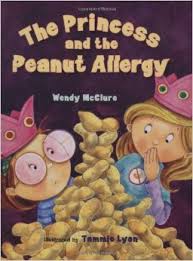
The Princess and the Peanut Allergy

Author: Wendy McClure

Illustrator: Tammie Lyon

Grade Level: Preschool to Grade 3


Buy it here!

Resources


Summary:
Wendy McClure’s The Princess and the Peanut Allergy is a wonderful story about a young girl named Regina who is planning her birthday party.  She has invited all of the girls in her class, including her best friend Paula.  Regina is thrilled about her upcoming birthday celebration and announces to her friends that it will be a princess party with fun activities and a castle cake made with chocolate nutty brownies and peanut butter candy.  When Paula hears about the cake, she tells Regina that she cannot eat anything that has peanuts in it because peanuts make her very sick, so much so that she once had to be hospitalized after accidentally eating one.  Regina becomes very upset with Paula, thinking that Paula is trying to ruin her party.  The girls get into an argument and they each go home to tell their parents what happened.  When Regina talks to her mom about the situation, her mom decides to read The Princess and the Pea to Regina, so she might understand that Paula, like the princess, is not responsible for the unfortunate situation.  After thinking about the story, Regina asks her mom to return to the bakery and order a new cake that contains no peanut products.  Regina is very happy to tell her best friend that she will not be able to enjoy the birthday cake.  The book ends with a note written by a doctor who is with the Food Allergy Institute at Mount Sinai School of Medicine to parents and friends of children with food allergies.

Element #5: Raising Awareness:
Element #5 is about characters raising awareness of other characters.  In this book, Regina is made aware of peanut allergies by her best friend Paula and Regina’s mother helps Regina understand that it is not Paula’s fault that she, like many other children, is allergic to peanuts.  Regina then raises awareness of peanut allergies by making sure that the food served at her birthday party can be enjoyed by everyone.  

Classroom Activity:
I would use this book as part of a lesson introducing students to food allergies.  Many classrooms today are “peanut safe” or “allergy aware” and discussing food allergies with students has become a rather common activity.  I think this book would be especially helpful if a student in the class or students in the cafeteria have a peanut allergy.  After reading this book, I would have any students with food allergies share their experiences in school.  If I had no students with food allergies, I would ask them to think about ways in which they could be mindful of other children with food allergies they may encounter.

Friday, April 15, 2016

For the Right to Learn: Malala Yousafzai's Story


For the Right to Learn: Malala Yousafzai's Story
Author Rebecca Langston-George
Illustrated by Janna Bock


Where to buy: http://www.amazon.com/For-Right-Learn-Yousafzais-Nonfiction/dp/162370426X

Teacher Resources: http://www.jumpintoabook.com/2016/01/what-would-you-do-for-the-right-to-learn/


Summary


This story focus around the life of Malala Yousafzai, a young Pakistani girl who spoke out against the Taliban that were denying girls the right to get an education.  She wanted equal education for all girls.  The story begins talking about her father who ran his own school and encouraged all his children to learn and believed that girls had the right to an education.  Education was not available to all children because they could not afford it and families would typically pay only for their son's education.  The Taliban leaders where Malala lived were against allowing girls going to schools and would intimidate school leaders like her father to either stop teaching girls or be forced to shut down his school.  Her father did not back down but some teachers did quit due to the Taliban threats.  Soon the Taliban became more vocal in their desire to deny education for all girls by stating things on the raid like, "NO EDUCATION FOR GIRLS! GIRLS WHO ATTEND SCHOOL BRING SHAME TO THEIR FAMILIES!!"  On December 2008, in Pakistan it was announced that all girl schools will close and not schools will be allowed at school.  However Malala was still speaking for equal education rights for girls and soon became a blogger for the British Broadcasting Corporation (BBC) that was looking for someone to blog about the school closings.  She used the pen name Gul Makai and would speak to a BBC reporter on the phone who would type the blog for her and the blog gained so much popularity that the BBC translated it into English for the whole world to read.  Malala was doing all of this even the fear of going to jail, being beaten or threat of getting bombed.  The violence between the Pakistan's army and the Taliban grew so much that she and her family, alongside 2 million people, were forced to evacuate in May 2009.  Three months later the fighting had ended and her and her family had returned and it looked as if the Taliban was gone and his dad resumed classes with classes for both boys and girls.  This is when Malala started becoming a know national figure fighting for the rights of equal education for women and she soon appeared on TV, radio and newspaper interview all over the world and Pakistan even renamed its peace prize to the National Malala Peace Prize in honor of her.  The Taliban were not gone and they soon began threatening her and announced to the world that Malala was on their hit list.  The police suggested that her and her family leave, but she refused to hide and remain silent about the cause she was fighting for.  Then on October 9, 2012 a member of the Taliban came rushing into of of Malala classes with a gun a she was shot three times in the head.  She was rushed to the hospital and soon required more medical surgeries and assistant and was flown to a hospital in Birmingham, England, so that she was also safe from any further attacks from the Taliban.  News of her getting shot by the Taliban spread all over the world with thousands of people sending her get well cards.  She stayed in the hospital for three more months and had many more surgeries in order to help repair drooping eye and fix her facial nerves.  After many months for recovering, Malala on July 12, 2013 gave a speech before the world leaders at the United Nations and declared this now famous quote, "One child, one teacher, one book and one pen can change the world."  Even a bullet could not silence her desire to raise awareness and fight for the right of all people, men and women, being allowed to receive an education.


Element 5: Raising Awareness

This book talks about how Malala was fighting against the Taliban and society values/norms when it came to women and education.  In that women were expected to just stay at home and cook and clean and take care of the children.  Women that wanted to learn should be looked down upon and beaten or thrown in jail for wanting to learn.  Malala was raising awareness about how women were being treated in Pakistan and that they were being denied the right to and education.  She did this by at first using a pen name for a blog she was writing for the BBC about all the girl school closings and how girls where no longer allowed to attend schools and receive any form of education.  This alerted the world to what was going on there and she was raising this awareness of equal education for women, even with the threats for the Taliban and fear of being beaten, thrown in a jail or even killed.  Even after getting shot in the head multiple times by the Taliban, she lived and is still speaking out for equal education rights for all women and without her, the world may not have know the exact circumstances that were occurring in Pakistan and in other Middle Eastern countries when it came to denying women the right to an education.  Her first hand accounts provided the chance for the world to get a true understanding of what was happening and is how Malala has now become the leading figure when it comes to getting equal educational rights to all women throughout the world.


Activity

After reading the book will have a whole class discussion ask them about what their opinion is about girls like Malala being denied the right of going to school just because she was a girl.  Do they think that it's okay to not be allowed to do something just because of your gender?  For 10 minutes of so the whole class will talk about this and can write some of their responses on the whiteboard.  When this is done will use the SmartBoard and show students different examples occurring in the world today, where women are denied simply rights, such as being allowed to show their faces, just because they are women and the society they live in are telling them what they can or cannot due.  Ask students this would make them feel if they were not able to do certain things because society they were "different" or were not as seen as equal to others because of their gender?  Lastly the class will work together coming up with peaceful ideas of what they would do to gain these rights back.